|
|
|
Welcome to the website of The National Chinchilla Society.
Membership is from July 1st every year. You can join/re-join online or, alternatively, download printable application forms
If you join after the start of the membership year (July 1st each year), back copies of the gazette for that year will be sent to you, so you do not lose out.
.
About the National Chinchilla Society (NCS)
The NCS was originally formed in the 1950’s. In was responsible in the UK for the importation, breeding and development of the chinchilla into the well-known animal many people own today. In 1993 the name was changed to the National Chinchilla Society. It must be stated that the Society is not associated with the fur trade. The aims of the Society have remained the same throughout its long history. These are to encourage and promote the keeping, breeding and exhibition of quality chinchillas, whilst at all times maintaining good husbandry practices.
|
|
The National Chinchilla Society now also has a Facebook page so click here and visit us at :- www.facebook.com/natchinsoc
The Chinchilla
Part of the rodent family, the chinchilla originates from high up in the Andes Mountains in South America. An adult can be up to 30 to 36 cm long (including its bushy tail) and normally weighs between 600-800 grams (females being bigger than males). They have an average life span of 8 to 10 years, but in some cases have been known to live for over 15 years. Chinchillas have fine dense fur, stiff whiskers, large ears and eyes. This dense fur means that they can’t harbour parasites, however, it does make them susceptible to heat stroke, so care should be taken to ensure that they don’t get hot. The fur (which is usually considered to be the softest of all animals) also makes them look bigger than they actually are. The bone structure is actually quite delicate meaning they need to be handled with a degree of care (i.e. they should not be handled roughly or squeezed) and they are therefore not suitable as pets for young children.
Chinchillas are crepuscular which means they are most active during dawn and dusk. However, they are happy to interact with people anytime during the day. Males and females make equally good pets. They are social creatures and can be kept singly or, after a period of introduction, both sexes can normally be kept as same sex pairs. However, adult males should not be kept together as cage mates in close proximity (or in the same cage) as females, since the males may become competitive and fight when the female comes into season. Very closely related animals should not be bred together.
|
|
|
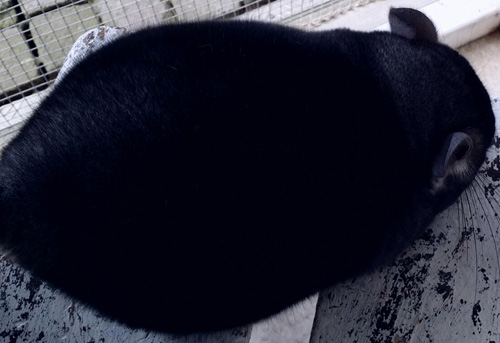
Above: Extra dark Standard
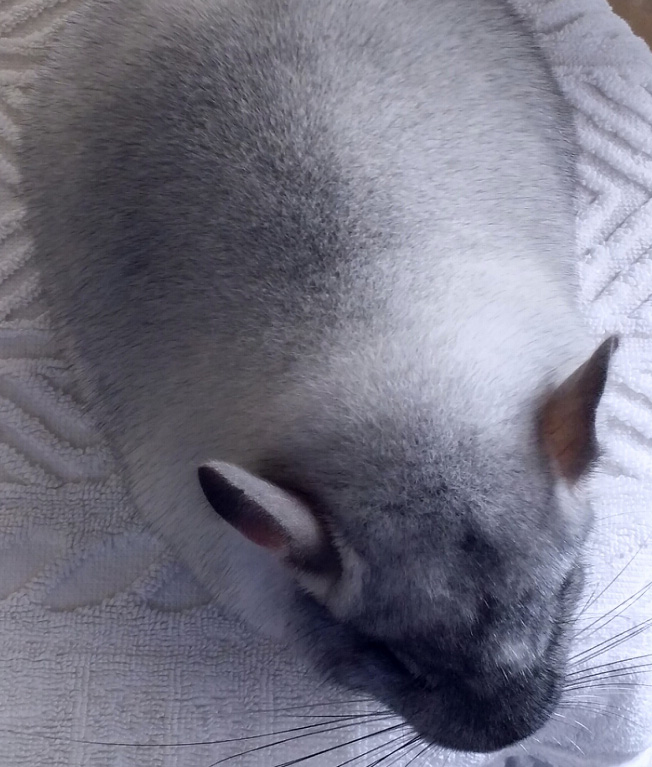
Below: Wilson White
|
The Chinchilla is generally a gentle, timid and intelligent animal with its own individual personality. The nutritional requirements are quite bland, all they require is a good quality commercially produced chinchilla pellet, fresh, clean, dry hay and fresh water. Ensure all feed is fresh and mould free to avoid serious stomach upsets. An occasional suitable treat is fine, but these must be limited in quantity. The natural habitat of the chinchilla is quite barren and their digestive system has not developed to be able to cope with rich, sweet foods (although their favourite treat is a raisin... but only give one, once a day at most!).
Chinchillas have continuously growing teeth and permanently need something to chew on. Pumice stone or pieces of wood are recommended.
They are rock hoppers that like to scurry, so they need floor space in their cages rather than height. Tall cages without separate floors to prevent falls, can result in broken bones or worse.
It is recommended that cages should be made of welded wire mesh, at least 16g in thickness, with holes no larger than 1.9cm (3/4 inch) square. Additionally, there should be a wooden area where your chinchilla can sit.
|
|
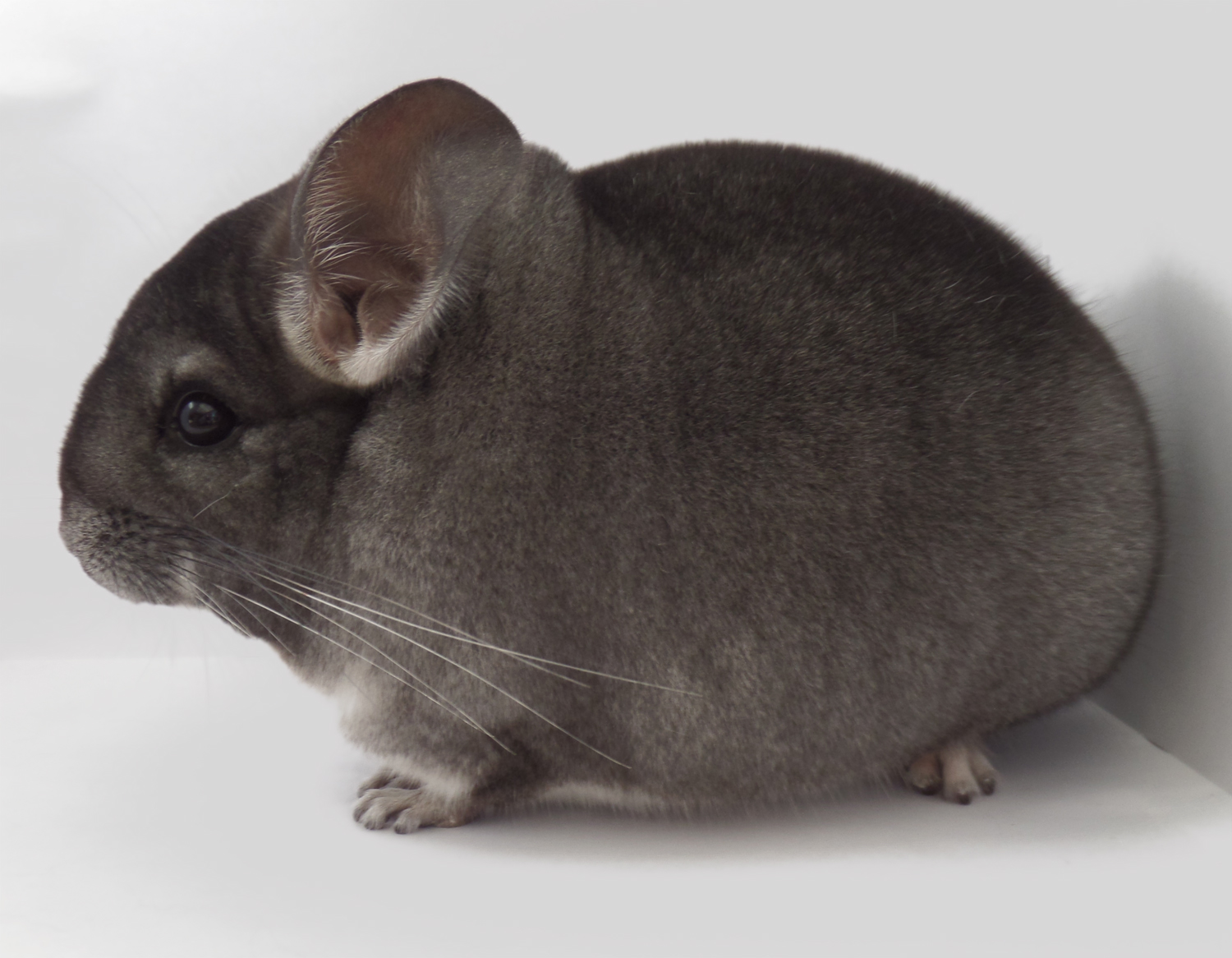
Above:5 month old standard
|
Any sort of plastic (including non toxic) is unsuitable for them, they like to chew and when ingested it can cause a blockage of the gut. Raised wire floors allow droppings, urine and partially eaten food to fall through, which is a positive given that the chinchilla is a clean animal that does not like its fur to become soiled. For the sake of the welfare of your animal, prior to making purchases of housing, toys, food etc., do some careful research. Not everything being sold/marketed as being suitable for them actually is.
Chinchillas should be given a dust bath for at least 10 minutes every day. Chinchilla dust/sand is specially formulated to cleanse their fine fur of grease and dirt. Without this the fur becomes dull and sticks together making it part in great clumps. This is not only uncomfortable for the animals but unsightly and detracts from, what is after all, one of the worlds most beautiful creatures.
|
Recommended UK Resources:
This information, together with all content on this website, should not be reproduced without the express permission of the NCS Website Manager. However, links to this webpage are welcomed. Please note the National Chinchilla Society does not inspect premises nor approve Breeders.Buying from a member of the NCS is also not a guarantee of quality.
All material, names and logos on this website © National Chinchilla Society Website Manager - Siân Allcoat, 2014. All articles, name (National Chinchilla Society, NCS) and NCS logos printed in this publication are the copyright of the National Chinchilla Society. The permission of the Committee via the Website Manager must be obtained prior to any form of reproduction by any means including electronic retrieval systems.
|
Copyright © 2020, The National Chinchilla Society
|


